Mississauga windows: start with what failed
Start with the building. A tower suite, a condo townhouse, a 1970s house and a heritage-village cottage can show one problem and need different fixes or approvals. Then find what failed: glass, a part or the frame. We’re a free referral service: we connect you with an independent local pro who handles that kind of window, and they quote and do the work.
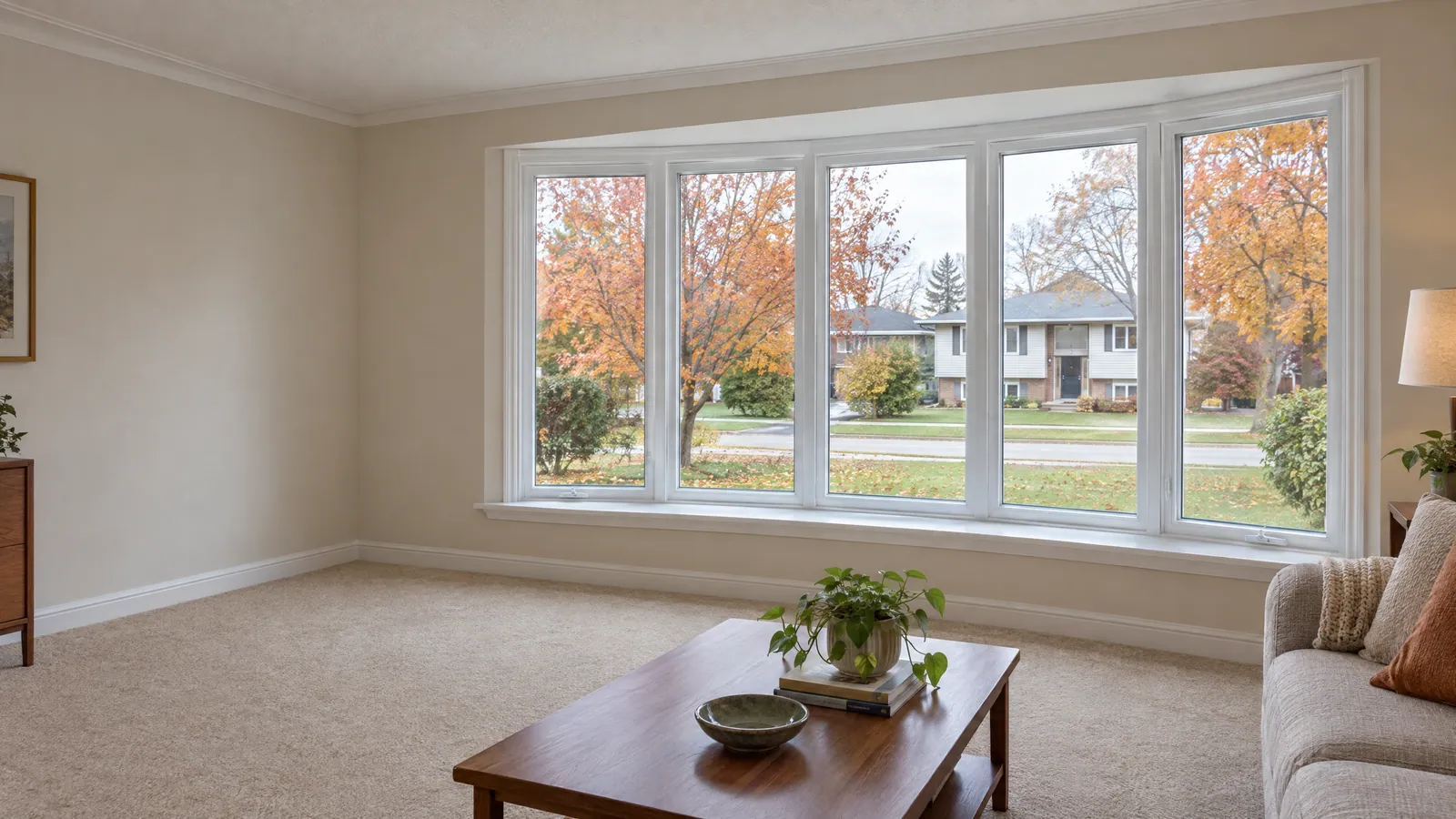
Glass problems
Glass problems: fog, cracks and breaks
Foggy sealed units
Haze between the panes that no cloth reaches means the seal has failed. A new sealed unit usually fits your frame.
Broken window glass
A branch in a windstorm, a ball, a break-in. Make it safe, cover the opening, then replace the pane, not the frame.
Window film
Glare in a west-facing suite, or privacy at street level. In a condo, ask the board before any film goes on the glass.
Wipe the room side. Moisture that comes off is condensation; haze that stays means a failed seal.
Moving parts
Hardware problems: cranks, balances, locks and seals
Window repair
A crank that spins, a sash that drops, a lock that won’t catch, a draft. Usually one worn part, replaced alone.
Casement windows
The crank-out window in many houses built since the 1970s. The operator, hinges and sealed unit are each replaced separately.
Awning windows
Hinged at the top and cranked open, often over a sink or in a basement wall. The operator and glass are fixed separately.
Replacement
When the whole window should go: replacement options
Replacement windows
A soft frame, several failed units, or parts nobody makes. Same-size replacement needs no City permit; a bigger opening does.
Vinyl windows
A low-upkeep frame used in many replacements. Condo boards usually set colour and style, and both heritage districts lean toward wood.
Repair the glass or replace the window?
A plain walk through the decision by building type: who decides in a condo, and when glass or parts will do.
Your house
Window types common in Mississauga homes, by era
Postwar bungalows
Applewood began in the 1950s. Houses of that era often have second-round sliders and small basement windows, where tracks and latches wear first.
The new towns around the lakes
Erin Mills and Meadowvale were planned in the 1970s. Casements are common, and sealed units, operators and weatherstrip wear out together.
Newer semis and townhouses
Churchill Meadows was planned from the late 1980s, mostly semis and detached houses. Some townhouses belong to a condo corporation instead.
Check first
Condo and heritage windows need approvals first
Tower suites and condo townhouses
In most Ontario condos the windows are common elements that the corporation looks after. Ask the management office before you book anyone.
Old Port Credit and Meadowvale Village
The city’s two heritage districts have plans that favour keeping original wood windows. Check with City heritage staff before changing one.
Bigger or new openings
Adding a window, or enlarging one for a basement bedroom, needs a City permit. A same-size swap doesn’t, though zoning applies.
Fix or replace
Fix the part, or replace the window?
Fix the part when
- The frame is sound and square
- One or two units have fogged or cracked
- Only a crank, lock or weatherstrip is worn
- It’s original wood in a heritage district
Replace the window when
- The frame is soft, split or leaking
- Most windows are failing at once
- Matching parts are no longer made
- You’re enlarging the opening
Questions
Window questions from Mississauga homes and suites
Where pros work
Window help across Mississauga
Pros work across the city. Close to the city limits? We’ll check whether a pro covers your address.
Send a photo and name the building type
A photo, the type of building and the problem in a few words. We’ll route it to a local pro.