Foggy glass, failed seals
Can a foggy window be repaired? Usually, with a new sealed unit
Yes, in most cases. When haze sits between the panes and won’t wipe off, the window seal around the glass has failed. The usual fix is a new sealed unit, the glass part of the window, set into the frame you already have. First, think about the building. In a house, the choice is yours. In a condo suite or condo townhouse, the glass may belong to the corporation. We connect you with an independent local glass pro who replaces sealed units; they measure, quote and do the work.
- New glass in the frame you have
- Condo owners: check who owns the glass
- A photo starts the quote
A quick check
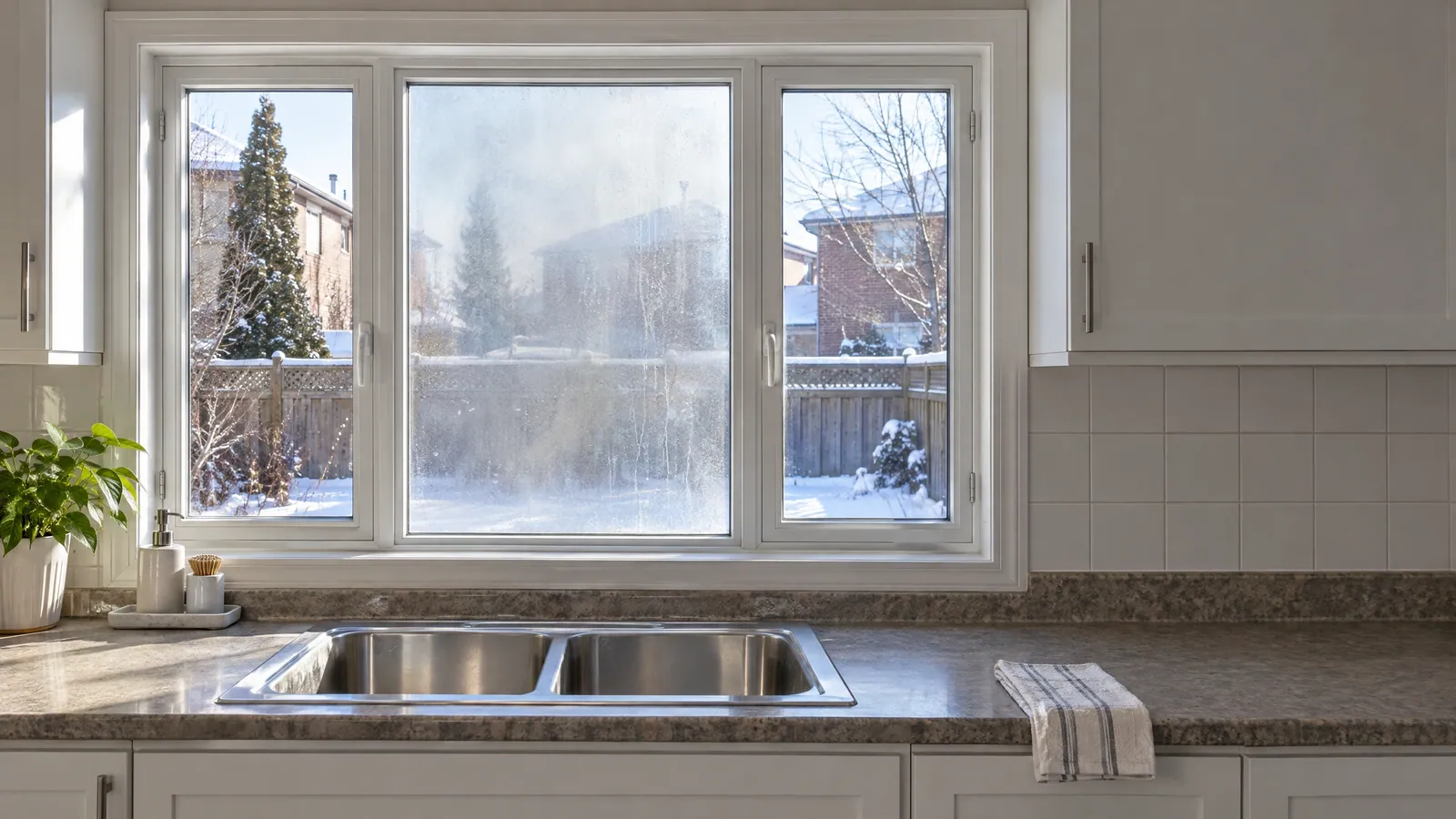
Fog inside the glass or condensation on it? A quick check
Wipe the room side with a dry cloth. It works the same on a suite’s window-wall as on a casement in a house.
Moisture you can wipe away
That’s condensation from indoor air, first on the coldest glass: the bottom of a balcony door, a bathroom window. Running the fan and moving air across the glass helps. The seal is fine.
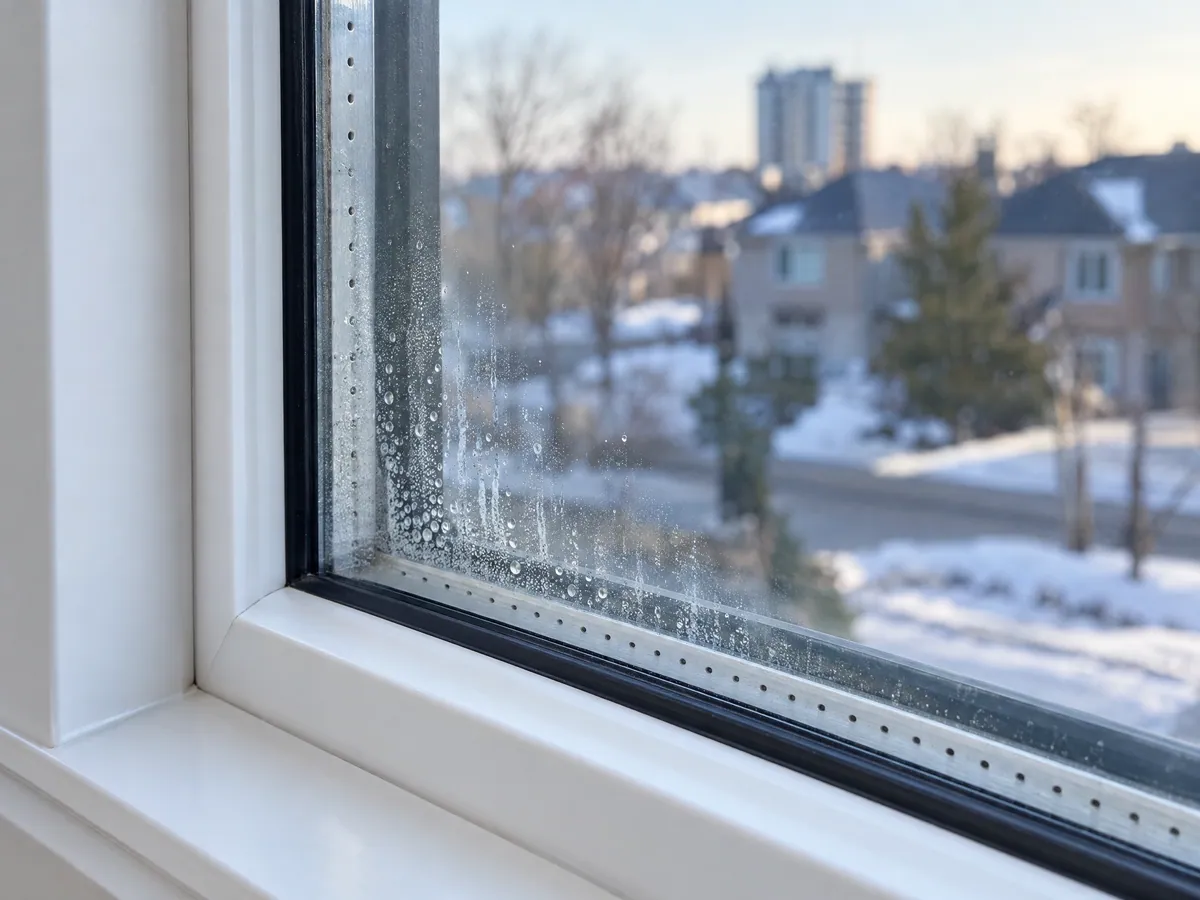
Haze you can’t reach
Fog, streaks or a white film between the panes means damp air has got past the seal. It comes and goes with sun and rain, and won’t dry out on its own.
Why now
Why so many 1970s–2000s Mississauga windows are fogging now
A sealed unit, also called an insulated glass unit or IGU, is two or three panes held apart by a spacer and sealed around the edge. Dry air inside keeps it clear.
Most homes in Mississauga were built between the early 1960s and 2000. Many have already had their windows replaced once, and both generations of glass are now at the age when edge seals give out. That’s why fog turns up in the casements of 1970s houses in Erin Mills and around the lakes in Meadowvale, often in several windows over a few years.
Weather adds to it. Many winter days here swing across freezing, and each swing flexes the seal. Water matters too: if a frame doesn’t drain, the unit’s bottom edge sits wet after heavy rain, and a wet seal fails sooner.
The glass-only swap
Swapping the sealed unit: what the pro measures, orders and fits
The frame, sash and trim stay where they are. Only the glass comes out.
Measure and check the frame
The pro measures the glass and how it’s held in, and looks at the sash and hinges. New glass in a failing frame isn’t worth buying.
Order the unit to size
You choose the glass: clear or low-E, double or triple where the frame has room, and tempered where the code calls for safety glass, as in a patio door.
Fit and seal
On a second visit the old unit comes out and the new one goes in. In a tower suite, the pro may need to book the service elevator through the management office.
Defogging
Defogging services and kits: what they do and don’t fix
Some companies drill small holes in the glass, dry the space between the panes and plug the holes. Home kits promise something similar. Side by side:
Defogging
Can improve the view on a unit that is fogged but not yet stained. It doesn’t rebuild the edge seal, and dried mineral lines usually stay. Ask in writing what it covers.
A new sealed unit
Made to size and fitted into the same frame. It clears the view and restores the seal. It costs more and needs a second visit, and it usually carries the maker’s warranty on the seal.
Before and after
A fogged patio door panel, with new glass
The same swap works on a patio door’s fixed panel. The frame stays.
Patio and balcony doorsWhen not to
When a glass-only swap isn’t worth it: rotten sash, broken frames, failing hardware
New glass only makes sense in a frame that will last. Not when:
The sash is soft or split
A rotten, cracked or twisted sash won’t hold a new unit square or sealed.
The frame leaks around the edge
Air or water coming in around the frame is a frame problem. Across several windows, replacement windows may be the better spend.
The hardware is failing too
A stripped crank can be fixed through window repair. When glass, hardware and frame are all worn, read the repair or replace guide.
What affects the quote
What affects the price: size, glass type, access and number of units
The pro will ask about:
- Size and shape, including large picture units and patio door panels
- Double or triple, low-E, tint, and tempered where safety glass is required
- How the unit is held in, and whether the sash has to come out
- Access: upper floors, a suite that needs the service elevator, glass behind a storm
- How many units are done on the same visit
Send a photo of the whole window, frame in view, and a rough width and height.
Condo owners
Condo units and condo townhouses: whose glass is it?
In most Ontario condos, windows are common elements. The corporation usually repairs and replaces them, and the board keeps the outside uniform. Some newer declarations make the windows part of the unit instead.
So before you book anyone, ask the management office who is responsible for fogged glass in your suite or townhouse. If it’s yours to fix, the building may still set rules on access and appearance. Our page for condo owners and corporations lists what to ask.
Rebates
Rebates: why glass-only work doesn’t qualify
Ontario’s Home Renovation Savings Program pays per rough opening for complete ENERGY STAR certified windows and doors, generally alongside a home energy assessment. A new sealed unit in an old frame isn’t a new window, so it doesn’t qualify.
The glass swap is still usually the smaller job and the smaller bill. If several frames are tired too, compare it with full replacement. Check the program page for current rules.
Questions
Questions about foggy glass and sealed units
Explore your options
Other window problems
Sealed-unit swaps are common requests in the city’s 1970s to 2000s neighbourhoods and its condo towers, including Erin Mills, Meadowvale, Churchill Meadows and Mississauga City Centre.
Photograph the fogged window, frame and all
Say whether it’s in a house, a townhouse or a suite, and roughly how big it is. We’ll pass it to a local pro who replaces sealed units.