Condo owners
Replacing a window or balcony door in your condo: the approval path
In most Ontario condos the windows and balcony doors are common elements, so the corporation repairs and replaces them. Read your declaration first. If the part is the corporation’s, report it to the management office and let the board act. If you want to change it yourself, the board must approve the change by resolution before work starts, and you sign a section 98 agreement that is registered on title.
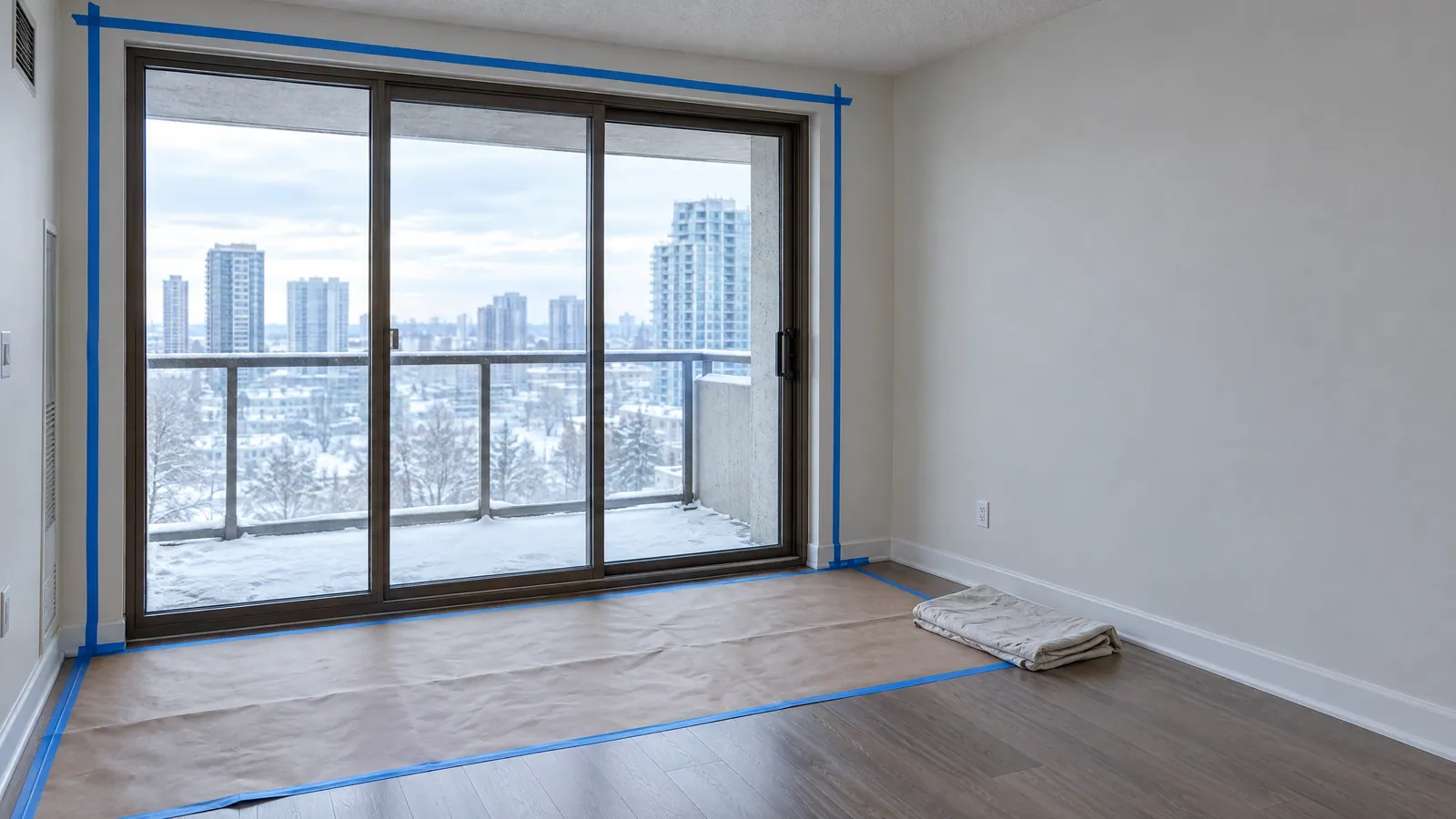
More than a quarter of Mississauga households live in buildings of five storeys or more, and about as many are condo households. For them, a foggy window or a balcony door that won’t lock starts with a different question: whose is it? This guide follows the path in order.
It is general information, not legal advice. Confirm the details for your building with your property manager or a condo lawyer.
Step 1: Read your declaration — unit or common element?
The declaration is the condo corporation’s founding document. It sets the boundary between your unit, which you own and look after, and the common elements, which the corporation owns and looks after. The management office can give you a copy.
Look for the description of the unit boundaries and any schedule of repair and maintenance duties. In Ontario, windows are typically classified as common elements. A common formula in declarations puts the boundary at the interior face of the glass, which makes the glass and the frame the corporation’s. Some newer declarations make windows part of the unit. Read how yours treats the balcony door as well as the windows, and don’t go by how a neighbouring building works.
Step 2: If the corporation owns it, report it and let the board act
When a window or door is a common element, the corporation is responsible for repairing and replacing it, usually funded from the reserve fund. Your job is to report it. Write to the management office and include:
- your suite number and floor
- a photo of the whole window or door, and a close-up of the fault
- what happens: fog between the panes, a crack, a door that won’t lock, water at the sill after rain
The board may repair it on its own schedule or fold it into a building-wide program. A foggy sealed unit or a cracked pane is worth reporting even when it seems small, because the fix is the corporation’s to arrange. If you would rather arrange the work yourself, ask management whether the board allows that and on what terms. Boards and managers looking for a pro can start at condo corporations and condo owners.
Step 3: Owner-initiated changes need board approval by resolution first
Sometimes an owner wants to change a common-element window or door: a new balcony door before the building’s program reaches the suite, or a different kind of glass. According to an Ontario condominium law summary, the change has to be consistent with the declaration and the Condominium Act, and the board must approve it by resolution before any work starts. Boards have broad discretion, so they can refuse or set conditions.
A request the board can act on usually includes:
- the pro’s written quote and the product details, including frame colour and glass
- photos or drawings of what will change
- the installer’s certificate of insurance, if the building asks for one
- the proposed dates and how the work will be done inside the suite
Wait for the resolution in writing before you place an order.
Step 4: The section 98 agreement, registration on title and who maintains it after
Section 98 of Ontario’s Condominium Act, 1998 deals with an owner’s changes to the common elements. After the board approves, the owner and the corporation sign a section 98 agreement, and it is registered on title to the unit. The owner usually pays the cost of preparing and registering it.
Read it closely, because it governs what happens later. An industry source notes that once an alteration is approved, the owner becomes permanently responsible for maintaining and replacing the altered windows. Check what the agreement says about repairs, insurance and what happens if the corporation later replaces the rest of the building’s windows.
Step 5: Uniform appearance — colour, style and grille pattern
Boards usually keep the outside of the building uniform: the same exterior colour, style and grille pattern on every window and door. From the street, the building should read as one building.
In practice, a replacement has to match what is there or what the corporation has specified. Ask management for the building’s window and door standard, or for the specs of an earlier approved replacement. The pro can then quote to that standard instead of guessing, and the board has less reason to send the request back.
Balcony doors and glass guards (City permit for guard repairs)
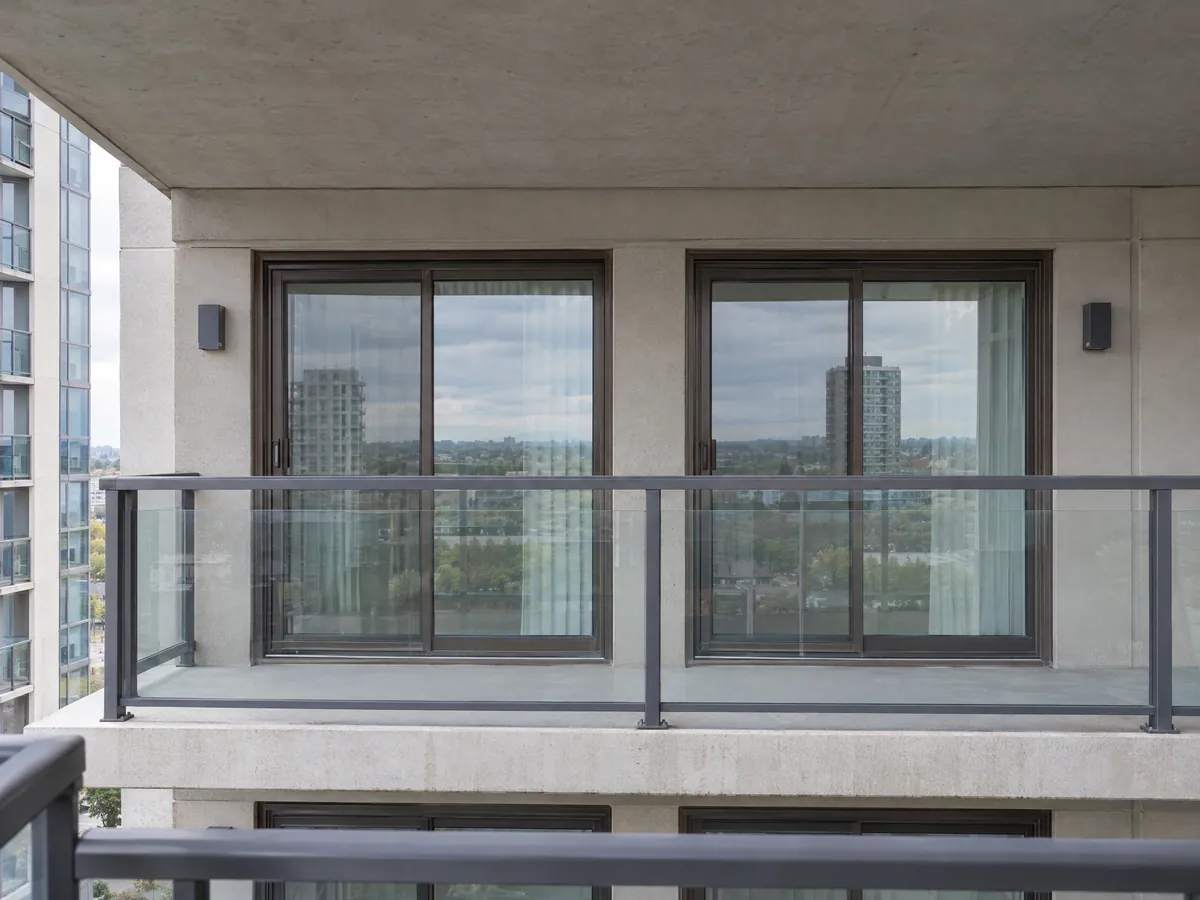
The balcony door is the part of a suite that gets the most use. The usual complaints are a door that won’t slide, won’t lock, or lets water in at the sill after heavy rain. Many of these come down to rollers, the track, a latch or a seal, not a new door; sliding door repair covers them. When the frame or glass has failed, patio door replacement explains what a new door involves. A door of the same size needs no City building permit, but in a condo it still needs the board.
The glass guard around the balcony is different. The City of Mississauga requires a building permit for a balcony on “a house, apartment or condo” and for “replacing or repairing guards” (City permit page). If a guard panel cracks, keep off that part of the balcony, photograph it and call the management office. Glass railings has more on guard glass.
Condo townhouses: same rules, different buildings
A condo townhouse looks like a house, with its own front door and yard. If it is part of a condominium corporation, the declaration still governs, and its windows and patio doors may be common elements just as a tower’s are. The board’s appearance rules apply along the whole row.
Check whether your townhouse is freehold or condo before you order anything; your purchase documents or the management office will say. The practical differences are small: ground-level access instead of a service elevator, and a backyard patio door instead of a balcony door.
Cost as factors: who pays matters more than size
We don’t publish prices. For a condo window or balcony door, the biggest difference to you is who pays:
- The corporation, if the part is a common element and the board is repairing or replacing it. The money comes from the reserve fund.
- You, if the board approves your own replacement. You also pay for the section 98 agreement and take on the future upkeep it sets out.
After that, the usual factors move the quote:
- size and type: a two-panel balcony slider or a single window
- glass type, and matching the building’s frame colour and profile
- floor and access: elevator booking, carrying large panels, work done from inside only
- the condition of the frame and sill, especially where water has come in
- building requirements such as insurance certificates, permitted work hours and floor protection
Working with the installer: quotes, access and documentation
We connect condo owners, boards and managers with independent local glass professionals. The pro inspects, quotes and does the work; we pass on the request and follow up so it doesn’t go quiet.
Before the visit, tell management the date, book the service elevator if your building uses one, and ask where the installer should park and load. Clear a path to the window or door.
Afterwards, keep the paperwork together: the board resolution, the section 98 agreement, the quote, the invoice and the product details. You will need them if something fails, if the corporation asks, or when you sell.
Have your declaration handy? Send the issue with a quote request, with your floor and the management office’s contact, and a pro can quote to the building’s standard.
Frequently asked questions
Are condo windows common elements in Ontario?
Typically, yes, but not always. The declaration for your condo sets the boundary. A common formula puts it at the interior face of the glass, which makes the glass and frame the corporation’s to repair and replace. Some newer declarations make windows part of the unit. Ask the management office for the declaration and read how it treats windows and the balcony door.
What is a section 98 agreement?
It is the agreement an owner signs with the condo corporation when the board approves the owner’s change to the common elements, such as a new window or balcony door. It is registered on title to the unit, and the owner usually pays to prepare and register it. It sets out who looks after the changed part afterwards. Confirm the details with your manager or a condo lawyer.
Can I replace my balcony door if the corporation won’t?
Only with the board’s approval. Put the request in writing with a quote, product details and photos. If the board agrees, it approves by resolution before work starts and you sign a section 98 agreement. Boards have broad discretion and can say no or set conditions, such as matching the building’s frame colour. Patio door replacement explains what a new door involves.
Who maintains a window I replaced with board approval?
Usually you do. The section 98 agreement normally makes the owner responsible for maintaining, repairing and eventually replacing the changed window or door, and it is registered on title to the unit. Read that part of the agreement before you sign, and keep it with your invoice and product details.
Who arranges the City permit when a condo balcony guard needs repair?
Start with the management office. The City of Mississauga requires a building permit for replacing or repairing balcony guards, condos included. If your declaration makes the guard a common element, the corporation arranges the repair and the permit. Until then, keep off the damaged section and photograph it. Glass railings explains guard glass and what a repair involves.
What drives the cost of a balcony door or condo window replacement?
First, who pays: the corporation from its reserve fund, or you under a section 98 agreement. Then the job itself: the size and number of panels, the glass type, matching the building’s frame colour and profile, the floor and elevator access, the state of the frame and sill, and building rules on work hours and insurance. A pro can quote once they know the standard.